Congee and Rice Rolls 粥 / 肠粉
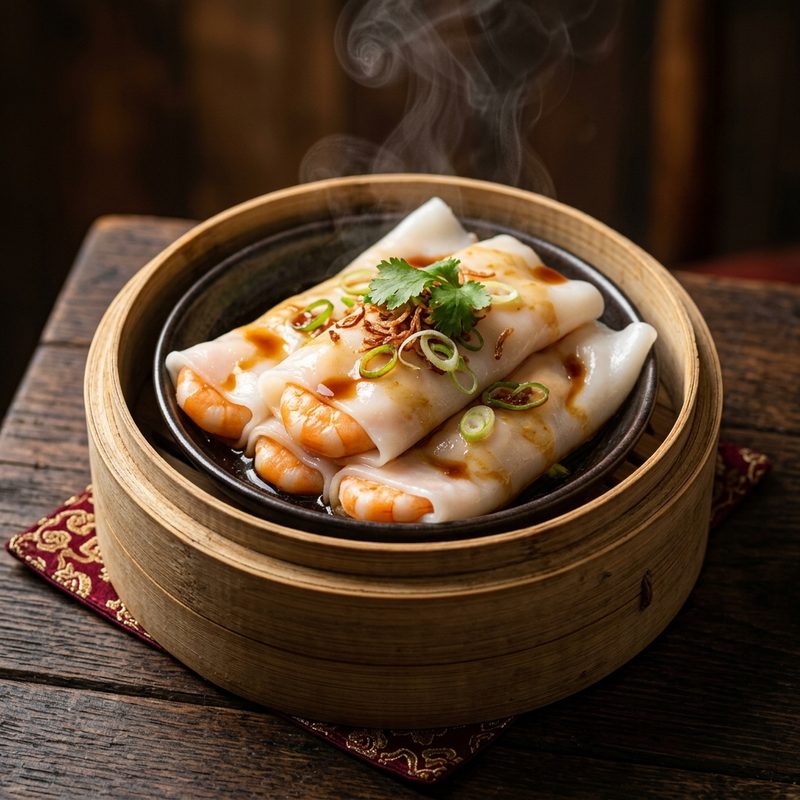
Homemade Prawn Cheung Fun: Silk-Smooth Steamed Rice Rolls
Known in Cantonese as Ha Cheung (Shrimp Intestine), these translucent rice rolls are prized for their slippery, delicate texture that melts in the mouth. This recipe focuses on the precise hydration of rice flour and wheat starch to replicate the 'cloth-pulled' quality of high-end dim sum houses using only a home bamboo steamer.
- Prep
- 40 min
- Cook
- 20 min
- Serves
- 4
- Level
- Intermediate
- Per serving
- 265 kcal
Method
Prepare the batter by whisking the rice flour, wheat starch, cornstarch, salt, water, and oil in a large bowl. Ensure there are no lumps. Let the batter rest for at least 30 minutes; this allows the starches to fully hydrate, which prevents the rolls from tearing.
Prepare the filling by patting the prawns completely dry. Season lightly with a pinch of white pepper and a drop of sesame oil. Set aside.
Create the sweet soy sauce by simmering light soy sauce, rock sugar, a splash of water, and a dash of dark soy sauce for color in a small pan until the sugar dissolves. Let cool.
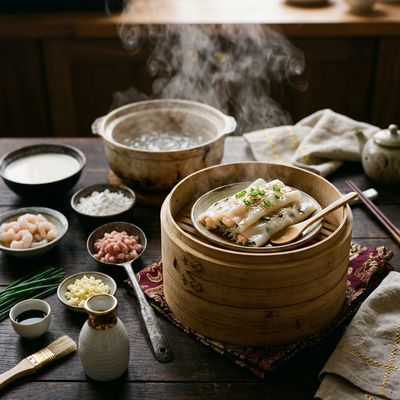
Prepare your steamer setup. Place a 10-inch bamboo steamer over a wok of boiling water. Find a flat stainless steel plate or a shallow square cake tin that fits inside the steamer with at least 1 inch of clearance around the edges for steam circulation. Lightly brush the tray with oil.
Crucial: Stir the rested batter thoroughly as the starch settles at the bottom. Pour about 60-80ml of batter onto the tray—just enough to create a very thin, translucent layer when tilted. Place the tray in the steamer, cover, and steam on high for 2 minutes.
Open the lid and quickly arrange 4-5 prawns in a single row across the center of the set batter. Cover and steam for an additional 2 minutes until the prawns are pink and the batter has bubbled up significantly.
Remove the tray. Using a greased bench scraper or spatula, gently lift one edge of the rice sheet and fold it over the prawns, rolling it into a cylinder. The sheet will be very delicate and tacky. Transfer to a serving plate.
Repeat the process, remembering to stir the batter and re-grease the tray every single time. Serve warm drizzled with the prepared sweet soy sauce and garnished with toasted sesame seeds or scallions.
Notes
Never skip the 30-minute rest; unhydrated starch results in brittle rolls that crack when folded.
Stir the batter before every single pour; starch settles in seconds and the last roll will be too thick if you don't.
If the roll is too sticky to handle, your tray wasn't oiled enough or the batter layer was too thick.
The Cantonese name 'Ha Cheung' (虾肠) translates to 'Shrimp Intestine' because the pleated, rolled shape resembles intestines, despite containing only seafood.