Guide
How to Set Up a Bamboo Steamer and Make Perfect Har Gow at Home
Mastering the bamboo steamer is the gateway to authentic Cantonese dim sum. This guide focuses on the technical precision required for Har Gow, ensuring success through exact dough hydration, pleating, and steamer management.
The Essential Steamer Setup
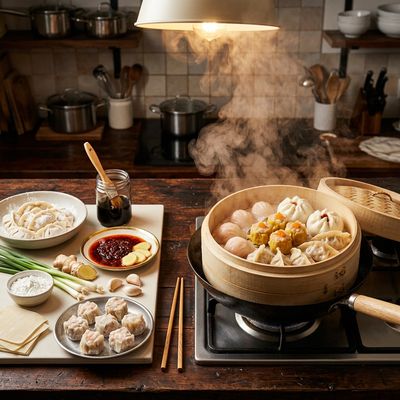
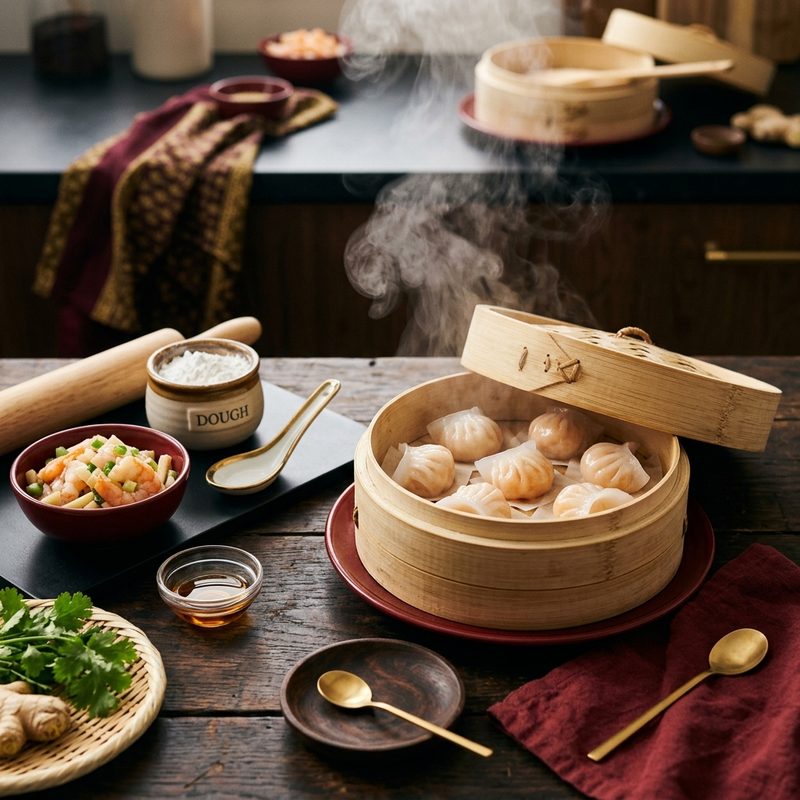
To set up a bamboo steamer in a home kitchen, you need a wok or a wide-rimmed pot that the steamer can sit on without the bottom slats touching the water. Fill your vessel with approximately 2 to 3 inches of water, ensuring there is at least a 1-inch gap between the water surface and the bottom of the steamer basket. Use perforated parchment paper liners or lightly oiled cabbage leaves to prevent sticking. Always bring the water to a rolling boil before placing the loaded steamer baskets on top.
The Dough: Har Gow (蝦餃 - Ha-Gaau)
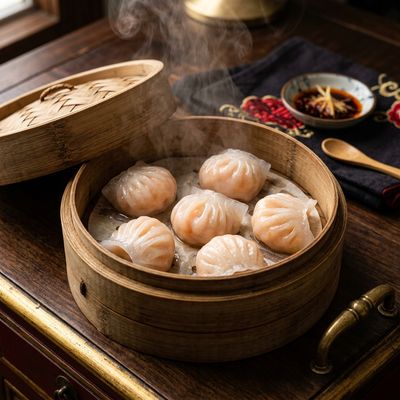
Har Gow translates literally to 'Shrimp Dumpling.' The hallmark of a great Har Gow is a translucent, chewy, yet firm skin. For the home kitchen, hydration is the most common point of failure. You must use 100g of wheat starch and 50g of cornstarch (or tapioca starch) mixed with 160ml of 'active' boiling water. The water must be bubbling when it hits the starch to partially cook it (gelatinization). Stir immediately with chopsticks until a shaggy mass forms, then cover with a lid and let it rest for exactly 10 minutes. This resting period allows the starch to hydrate fully before you knead in 1 teaspoon of lard or neutral oil.
The Art of Pleating
Roll the dough into a rope and cut into 12-15g pieces. Keep the dough pieces under a damp cloth or plastic wrap at all times; they dry out in seconds. Flatten each piece into a 3.5-inch circle using the side of a cleaver or a small rolling pin. Aim for 9 to 12 pleats per dumpling. A high pleat count isn't just for aesthetics; it creates a pocket that allows the shrimp to steam evenly without bursting the skin. Place about 1 tablespoon of filling in the center, fold the dough over, and pleat only one side, pressing it against the flat back side to create a crescent shape.
Steaming Mechanics and Timing
Unlike commercial steamers, home stoves have localized heat. Steam your Har Gow on high heat for exactly 6 minutes. Do not peek. Opening the lid drops the temperature and ruins the 'skin set.' If you are stacking two tiers, swap the top and bottom baskets at the 3-minute mark to ensure even cooking. Once finished, remove the steamer from the heat and let it sit closed for 1 minute before serving to let the skins firm up slightly.
Freezing and Reheating
Har Gow should be frozen raw. Place them on a parchment-lined tray so they aren't touching and freeze until solid, then transfer to a freezer bag. To reheat, steam directly from frozen for 8 to 10 minutes. Do not thaw, as the starch skin will become mushy and collapse.