Guide
The Home Kitchen Guide to Cantonese Congee and Har Gow
Mastering Cantonese breakfast requires precision in starch hydration and grain ratios. This guide covers the science of silky congee and the technical pleating of the iconic 'Har Gow' shrimp dumpling.
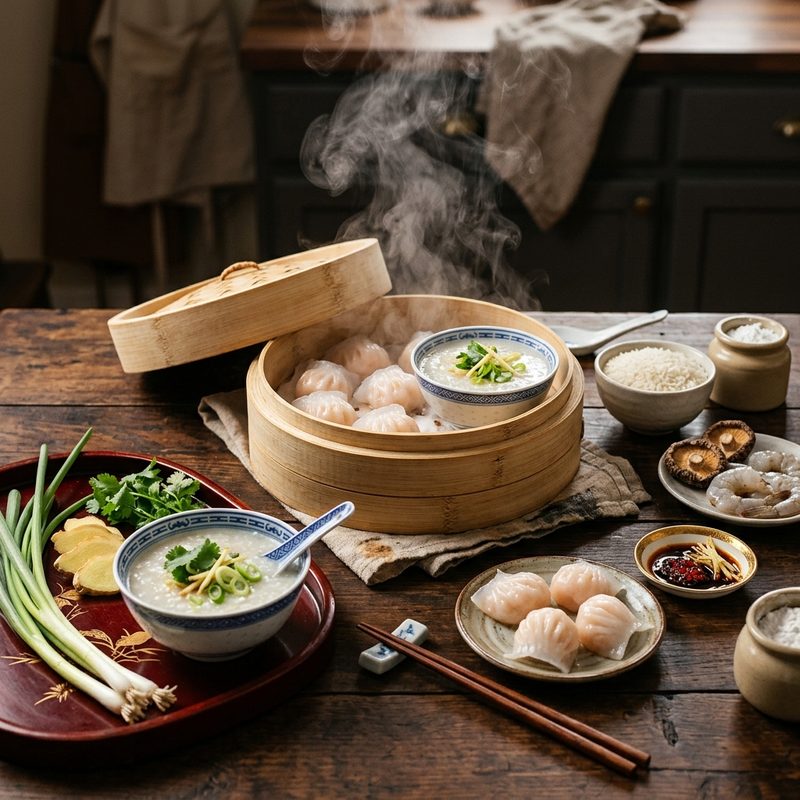
The Congee Foundation: Ratios and Timing
For a classic Cantonese congee (Juk), the ratio is the difference between a thick porridge and a silky, restaurant-quality soup. Use a ratio of 1:10 (one part rice to ten parts water/stock) for a standard consistency, or 1:12 for a lighter, more fluid 'sam kan' style. Use Jasmine rice or a mix of Jasmine and glutinous rice (80/20) for better body. Rinse the rice until the water runs clear, then soak for 30 minutes before boiling. Once the pot hits a rolling boil, reduce to a low simmer and stir every 15 minutes for 90 minutes. The goal is 'fa'—the blossoming of the grain until it disintegrates into the liquid.
Har Gow: The King of Dim Sum
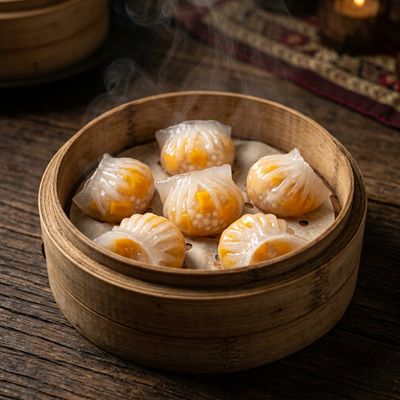
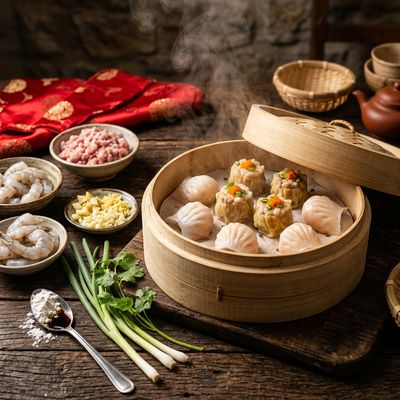
Har Gow (虾饺 - Ha Gaau), meaning 'Shrimp Dumpling,' is the ultimate test of a dim sum chef. The skin must be translucent, thin, and elastic. This is achieved through a gelatinized wheat starch dough. Unlike flour dough, wheat starch has no gluten and relies on heat-induced gelatinization. Failure occurs most often when the water is not at a true rolling boil or if the dough is worked too cold.
The Crystal Dough: Hydration and Mixing
In your home kitchen, weigh your ingredients for accuracy. Combine 100g Wheat Starch and 50g Tapioca Starch in a heat-proof bowl. Add a pinch of salt. Measure 160ml of water and bring it to a vigorous, rolling boil. Immediately pour the boiling water over the starch. Stir rapidly with a spatula until a shaggy mass forms. Cover the bowl with a lid for 5 minutes; this 'steam-resting' phase is critical for even hydration. Add 1 teaspoon of lard or neutral oil and knead until the dough is smooth and snowy white. The dough should feel like soft playdough and must be kept warm under a damp cloth at all times.
The Pleat and the Shape
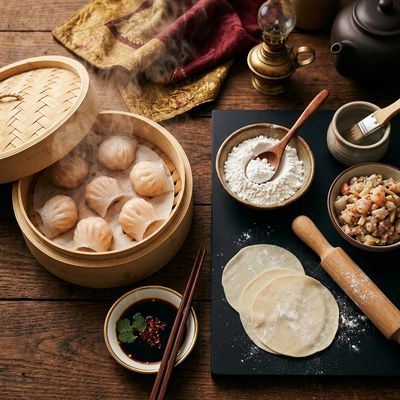
Divide the dough into 15g balls. Use a flat-bottomed cleaver or a heavy rolling pin to flatten each ball into a 3.5-inch circle. The center should be slightly thicker than the edges. Aim for a 'Crescent' shape. Place 1 tablespoon of filling in the center. Start pleating from one side, creating 9 to 12 tiny, overlapping pleats that curve the dumpling into a fan shape. Ensure the pleats are pressed firmly to seal, or they will unravel in the steam.
Bamboo Steamer Setup and Timing
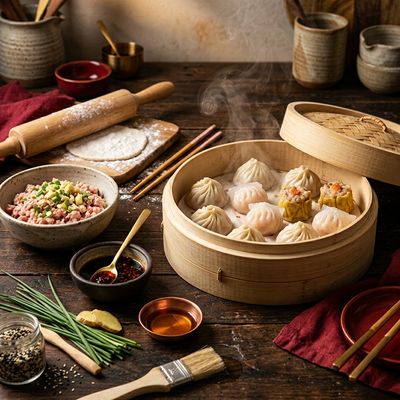
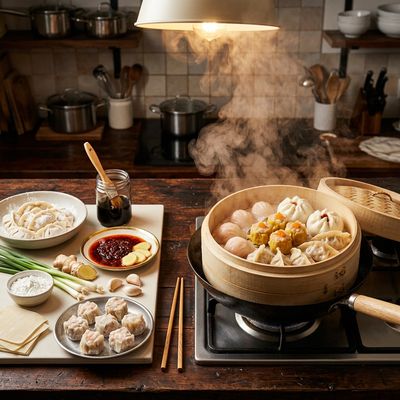
Line your bamboo steamer with perforated parchment paper or lightly oiled napa cabbage leaves to prevent sticking. Space the dumplings 1 inch apart to allow for slight expansion. Place the steamer over a wok of boiling water. Steam on high heat for exactly 6 minutes. Over-steaming will turn the translucent skin into a mushy, sticky mess. The dumplings are done when the skin is clear and the pink of the shrimp shows through.
Freezing and Reheating
Har Gow can be frozen raw. Place them on a tray in the freezer for 2 hours before transferring to a bag. Do not thaw before cooking. Steam frozen dumplings for 8-9 minutes. To reheat cooked dumplings, re-steam for 3 minutes; microwave reheating is not recommended as it toughens the starch skin.