Guide
The Ultimate Guide to Perfect Har Gow Wrappers for the Home Kitchen
Har Gow (蝦餃), or 'shrimp dumplings,' are the benchmark of a dim sum master. This guide focuses on the technical precision of the wheat starch dough to ensure a translucent, elastic wrapper that holds its shape and never tears during pleating or steaming.
The Essential Hydration Ratio
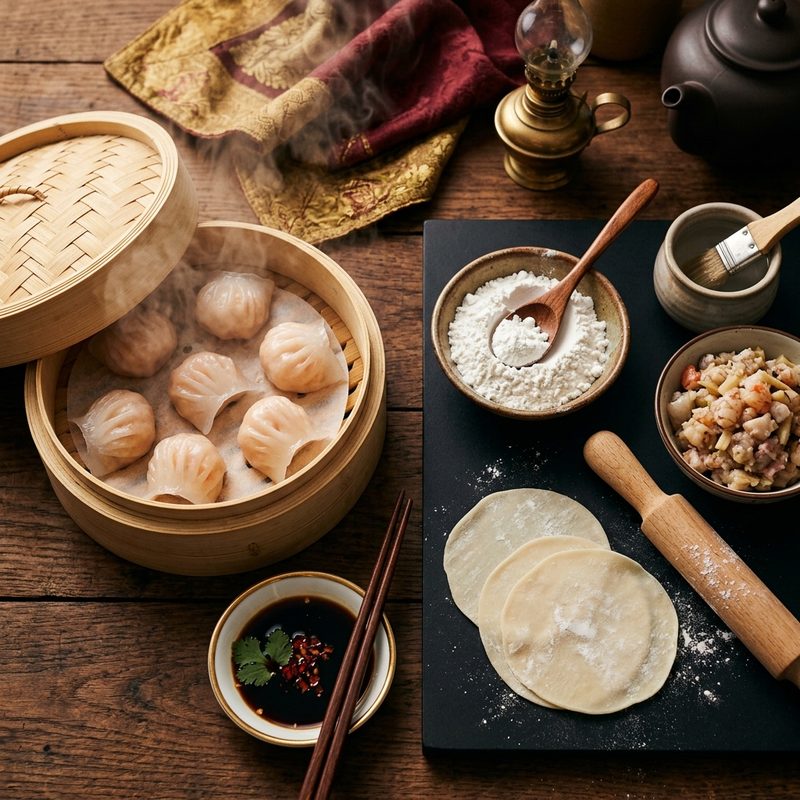
The foundation of a tear-free Har Gow wrapper is the starch-to-water ratio. You must use 100g of wheat starch and 50g of tapioca starch (which provides the elasticity). The hydration must be exactly 150ml to 160ml of water. Crucially, the water must be at a rolling boil—not just hot. Pouring boiling water directly onto the starch 'cooks' it instantly, creating the gelatinization needed for a workable dough. If the water is too cool, the dough will be crumbly and tear immediately.
The Mixing and Resting Phase
After pouring the boiling water over the starch, stir vigorously with chopsticks until a shaggy mass forms. Cover it with a lid or a damp towel for exactly 5 minutes. This 'smothers' the starch, allowing moisture to penetrate every granule. After 5 minutes, add 1 teaspoon of lard or neutral vegetable oil and knead the dough while it is still warm until it is perfectly smooth and white. If you wait for the dough to cool before kneading, it will lose its pliability.
Shaping Without Extra Flour
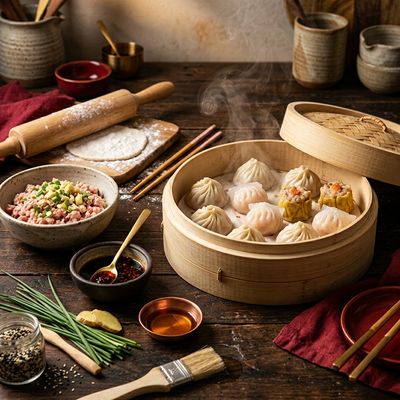
One of the biggest mistakes home cooks make is using extra starch to dust the surface. This dries out the skin and causes cracks. Instead, lightly oil your work surface and your rolling pin (or a flat-bladed cleaver if you are traditional). Keep the dough ball in a sealed plastic bag or under a heavy damp cloth at all times. Take out only enough for one wrapper (about 8-10 grams) at a time. Roll it into a thin circle, roughly 3.5 inches in diameter, ensuring the edges are slightly thinner than the center.
The Art of the Pleat
For a home cook, aim for 7 to 10 pleats. While masters do 12 or more, 7 is the 'safety zone' that provides structural integrity without over-handling the dough. When pleating, use your thumb and forefinger to pinch the front skin against the back skin, which should remain flat. Do not overstuff the dumpling; leave at least a quarter-inch of space at the top to allow the shrimp filling to expand slightly during cooking.
Steamer Setup and Precision Timing
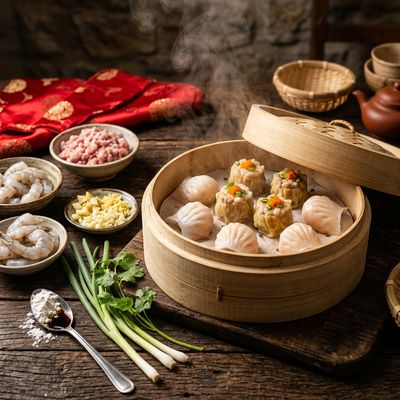
Line your bamboo steamer with perforated parchment paper or lightly oiled carrot slices to prevent sticking. Place the dumplings at least one inch apart. Bring your water to a full boil before placing the steamer basket on top. Steam on high heat for exactly 6 minutes. Do not peek. If you over-steam them, the starch will break down and the skins will become sticky and tear when you try to lift them.