Guide
How to Achieve a Crackly Sugar Crust on Char Siu Bao at Home
Unlock the secrets of Su Pei Char Siu Bao (酥皮叉燒包), the iconic 'Snowy Mountain' buns known for their crackly, sweet topping and savory pork filling. This guide focuses on the technical precision required for perfect dough hydration, pleating, and the sugar crust application using a standard bamboo steamer for proofing.
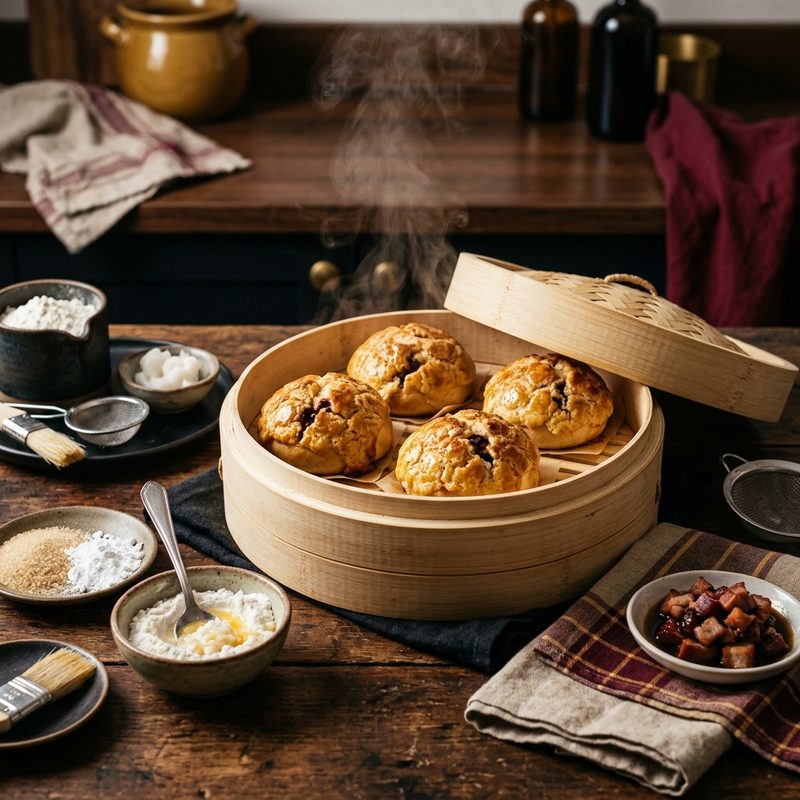
Understanding Su Pei Char Siu Bao
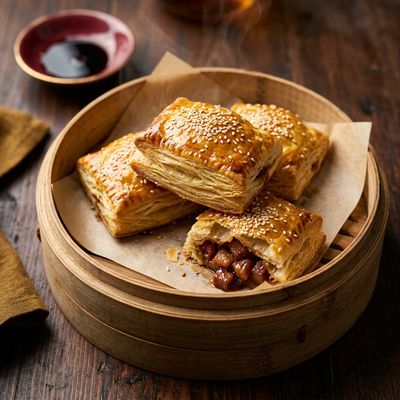
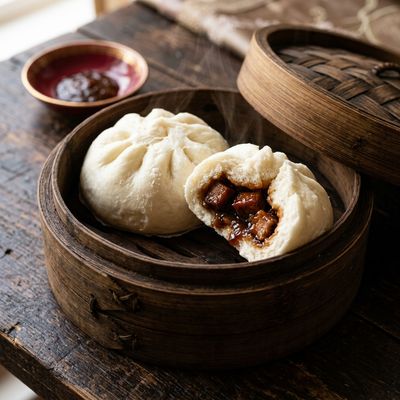
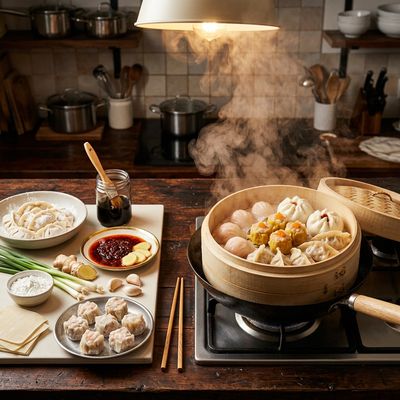
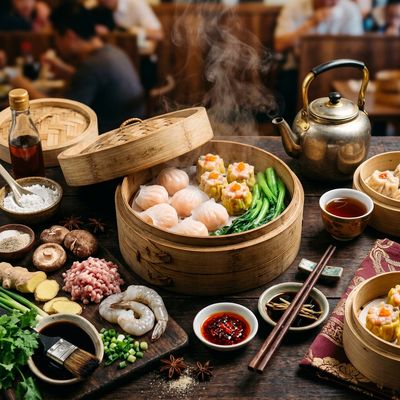
In Cantonese, these are known as 酥皮叉燒包 (Su Pei Char Siu Bao). 'Su Pei' translates to 'shortcrust' or 'crispy skin,' referring to the cookie-like topping that shatters upon the first bite. Unlike the traditional white steamed bun, this version is baked to achieve a golden finish while retaining a fluffy interior. In a home kitchen, we use a bamboo steamer as a proofing box to maintain the specific humidity required for the dough to rise without forming a dry 'skin' before the topping is applied.
Dough Hydration and The First Rise
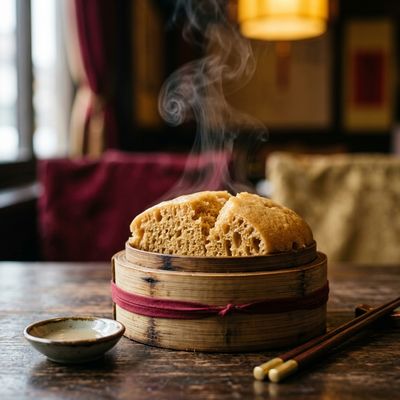
The foundation of a great bun is the hydration level. For a home kitchen using Hong Kong flour (or bleached all-purpose), aim for exactly 58% hydration. For 300g of flour, use 175ml of liquid (a mix of warm water and one egg). Knead until the dough is 'three cleans'—clean hands, clean bowl, and clean dough surface. Place the dough in your bamboo steamer, put the lid on, and let it rest for 45 minutes. The bamboo is breathable yet retains enough moisture to prevent the dough from drying out, which is the primary reason why crusts fail to adhere later.
Precision Pleating and Bench Rest
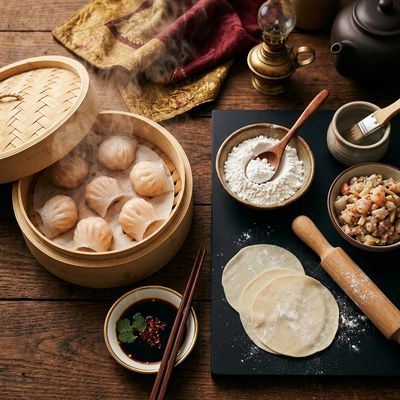
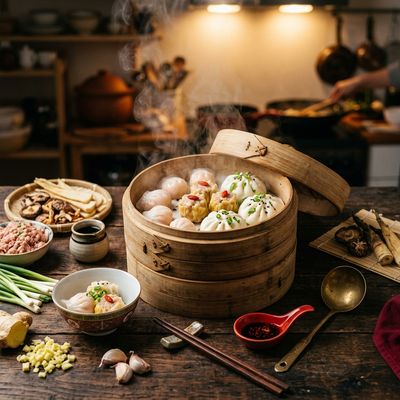
After the first rise, divide the dough into 40g balls. Use a rolling pin to create a disc where the edges are thinner than the center. Aim for exactly 12 to 14 pleats. While traditional steamed buns show their pleats, for sugar-crusted buns, we pleat tightly to seal the juices, then flip the bun upside down so the smooth side faces up. This provides a flat, stable surface for the crust to sit on. Place the shaped buns back into the bamboo steamer for a final 30-minute proof.
Applying the Sugar Crust
The 'sugar crust' is a paste made of butter, powdered sugar, dry milk powder, and cake flour. It should be chilled for 20 minutes before use. Roll the crust paste between two sheets of parchment paper until it is 2mm thick. Use a circular cutter slightly larger than the diameter of your bun. Gently drape the disc over the proofed bun. Do not press down; the heat of the oven will cause the crust to melt and wrap around the dough naturally.
Steamer Setup and The Hybrid Bake
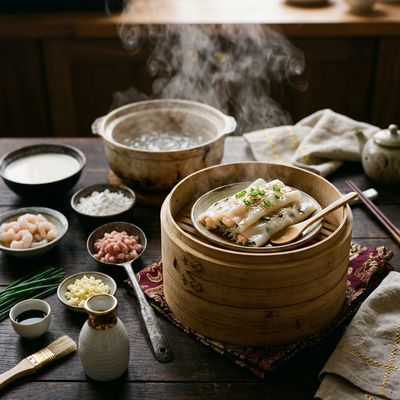
While these buns are baked, the bamboo steamer is your best friend for the final proofing stage. To ensure the buns don't collapse when they hit the oven heat, the 'steamer setup' involves placing the steamer over a pot of lukewarm (not boiling) water for the last 15 minutes of proofing. This warms the dough core. Transfer the buns to a preheated oven at 200°C (390°F). Bake for 12-15 minutes. The high heat is essential to 'set' the sugar crust before the bun expands too much, preventing the topping from sliding off.
Freezing and Reheating Instructions
These buns freeze beautifully after they have cooled completely. Wrap each bun individually in plastic wrap and store in a freezer bag for up to one month. To reheat, do not use a microwave, as it will turn the sugar crust into a sticky mess. Instead, use an oven or air fryer at 150°C (300°F) for 8-10 minutes. This restores the 'Su Pei' (crispy skin) to its original crackly texture.