Guide
How to Make Silky Cantonese Cheung Fun in a Bamboo Steamer
Achieving the elusive silkiness of Cantonese rice noodle rolls at home requires precision in hydration and temperature control. This guide breaks down the professional techniques for perfect Cheung Fun using standard home equipment.
Understanding Cheung Fun (肠粉)
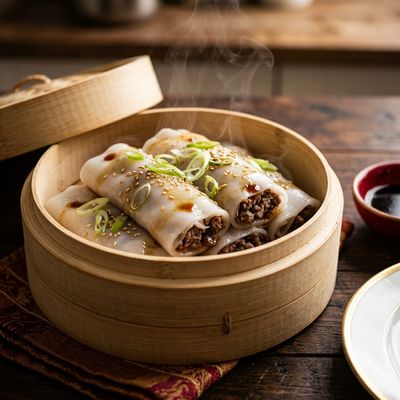
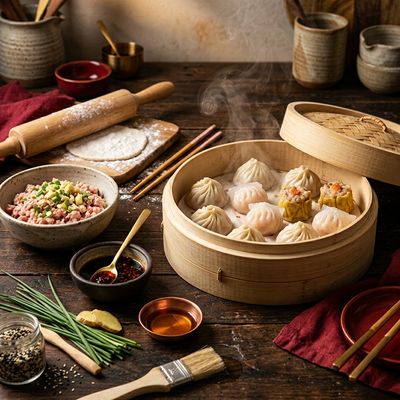
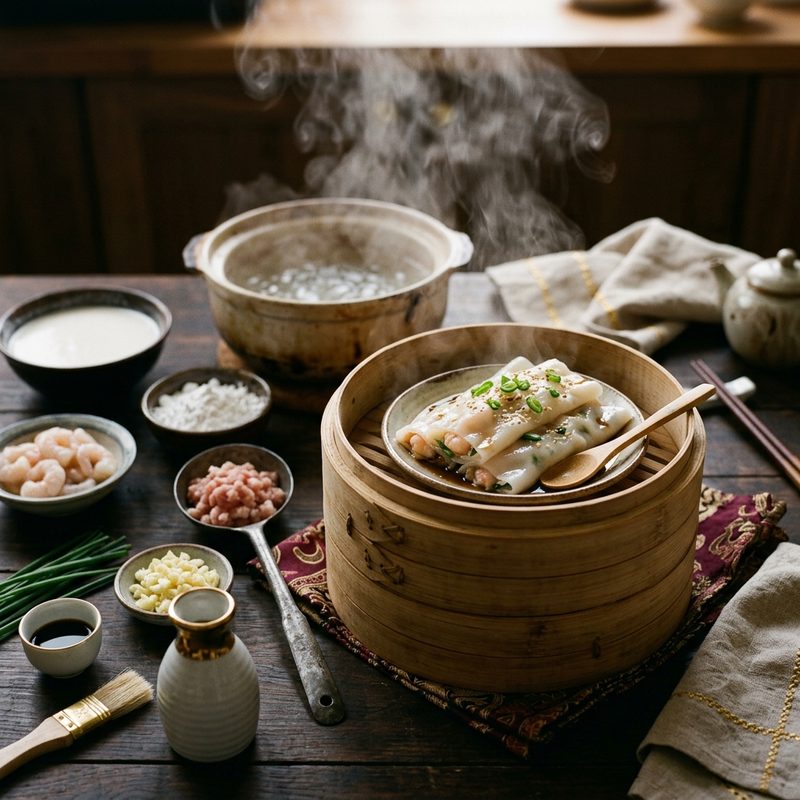
Cheung Fun translates literally to 'intestine noodles'—a name derived from their smooth, rolled appearance resembling small intestines, rather than any meat content. In a professional dim sum kitchen, these are made on giant cloth-lined steam tables. At home, we replicate this by using a bamboo steamer and a flat-bottomed stainless steel plate to achieve that signature translucency.
The Golden Hydration Ratio
The foundation of silkiness is the ratio of aged rice flour to starches. For a home kitchen, use 100g of aged rice flour, 30g of wheat starch (for translucency), and 15g of tapioca starch (for elasticity). The hydration must be exactly 400ml of room temperature water. This 1:2.8 ratio ensures the sheet is thin enough to be translucent but strong enough to roll without tearing. Ensure you weigh ingredients in grams rather than using cups for accuracy.
The Crucial 30-Minute Rest
Never steam a freshly mixed batter. You must let the batter rest for at least 30 minutes at room temperature. This allows the starch granules to fully hydrate and swell. If you skip this step, the texture will be gritty and the sheet will crack or crumble when you attempt to fold it. Give the batter a thorough stir right before every pour, as rice starch settles at the bottom very quickly.
Steamer Setup and the 'Bubble' Check
Place a shallow, flat-bottomed stainless steel pan inside your bamboo steamer. Ensure the steamer is level; if the batter pools on one side, the roll will be uneven. Use a high-heat flame to maintain a rolling boil. Pour just enough batter to cover the bottom thinly (about 60-80ml). Steam on high for exactly 2 to 3 minutes. The indicator of success is when the sheet 'blisters' or bubbles up away from the pan—this means the starch has fully gelatinized.
The Roll and Pleat Count
Remove the pan and let it cool for 30 seconds before rolling; the starch needs a moment to set. Using a bench scraper or a flexible spatula, push the sheet from one side. Aim for exactly 3 to 4 pleats (folds) per roll. Fewer than three results in a flabby texture, while more than four makes the roll too dense. Brush with a little toasted peanut oil or shallot oil immediately after rolling to prevent sticking.
Freezing and Reheating Instructions
Cheung Fun is best fresh, but it can be frozen. To freeze, place the rolled, unsauced noodles on a tray in a single layer until frozen solid, then transfer to a freezer bag. To reheat, do not use a microwave as it will rubberize the starch. Instead, re-steam the frozen rolls for 5-7 minutes until they become soft and translucent again. Only add the sweetened soy sauce after the reheating process is complete.