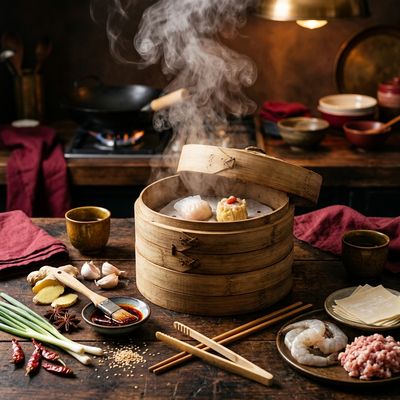
Steamed 蒸
Authentic Cantonese Lo Mai Gai (糯米雞) for the Home Kitchen
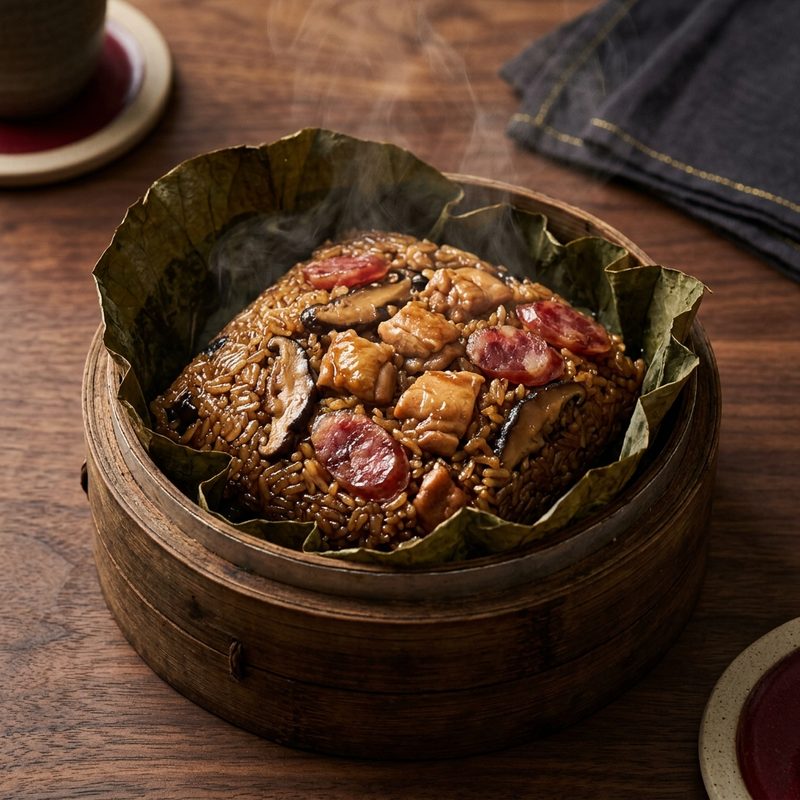
Lo Mai Gai (糯米雞) literally translates to 'Glutinous Rice Chicken' and is a cornerstone of Cantonese dim sum. This recipe delivers a restaurant-quality result using a bamboo steamer, focusing on the essential par-cooking of the rice and the aromatic infusion of the dried lotus leaf.
- Prep
- 480 min
- Cook
- 60 min
- Serves
- 6
- Level
- Advanced
- Per serving
- 485 kcal
Method
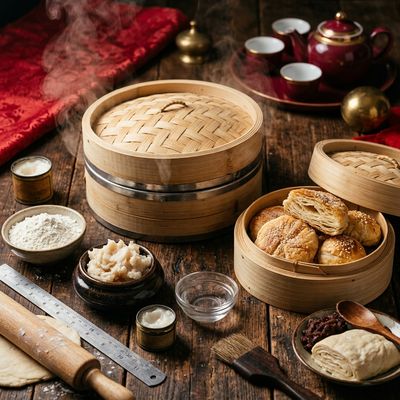
Preparation of Rice and Leaves. Soak the glutinous rice in cold water for at least 6 to 8 hours (ideally overnight). Simultaneously, submerge dried lotus leaves in boiling water and weigh them down with a plate to soften for 1 hour. Step 2: Par-Steaming the Rice. Drain the rice and spread it evenly on a heatproof plate. Steam in a bamboo steamer over high heat for 30 minutes. Once done, transfer to a bowl and fold in the chicken stock and dark soy sauce. The rice should be tacky but not fully mushy. Step 3: Preparing the Filling. Marinate the chicken with oyster sauce, cornstarch, sesame oil, and white pepper. In a wok, lightly stir-fry the chicken, lap cheong, and mushrooms until the chicken is 70% cooked. The cornstarch will create a thick gravy that is essential for keeping the rice moist inside the parcel. Step 4: Wrapping. Cut each softened lotus leaf into two halves, removing the tough stem base. Lay a piece flat. Place a large spoonful of rice in the center, flatten it, and top with the chicken mixture. Add another layer of rice over the top. Step 5: Folding. Fold the bottom of the leaf over the rice, then the sides, and finally roll it upward to create a tight rectangular parcel. The wrap must be snug to prevent steam from escaping, which ensures the rice absorbs the leaf fragrance. Step 6: Final Steam. Place the parcels in the bamboo steamer. Steam on high heat for 30 to 40 minutes. Step 7: Resting. Let the parcels sit for 5 minutes before serving; this allows the moisture to redistribute.
Notes
Never skip the overnight soak; if the rice core isn't hydrated, it will remain chalky regardless of how long you steam it.
If your lotus leaves have small tears, double them up to ensure the filling doesn't leak.
The secret to 'restaurant-style' Lo Mai Gai is adding a teaspoon of lard or shallot oil to the rice after par-steaming for a glossy, non-stick texture.
Ensure your water level in the wok is at least 2 inches below the steamer base to avoid soggy leaf bottoms.