Guide
How to Velvet Pork and Prawn for Professional-Grade Dim Sum at Home
Unlock the secret to the 'bouncy' texture of traditional Cantonese dim sum by mastering the art of velveting proteins. This guide teaches you how to achieve professional results in a home kitchen using simple tools and precise techniques.
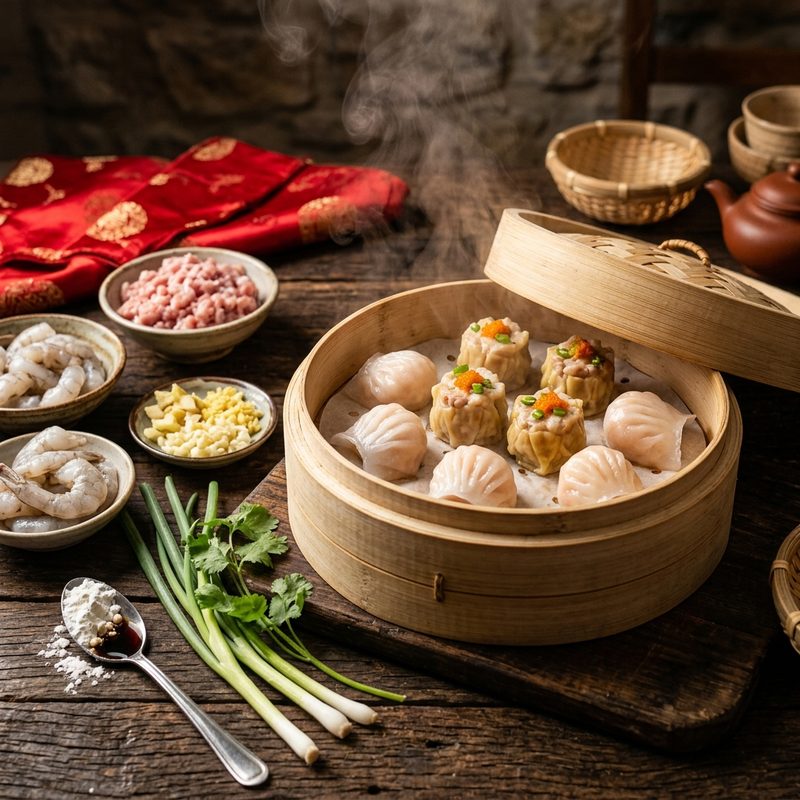
Understanding Siu Mai (烧卖)
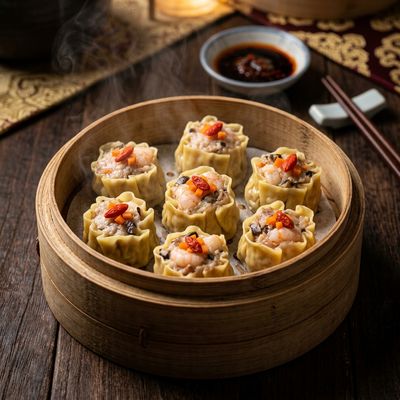
In Cantonese, 'Siu Mai' (Siu1 Maai2) literally translates to 'cook and sell,' implying a snack so delicious it is sold as soon as it is steamed. The hallmark of a great Siu Mai is not just the flavor, but the texture—a specific 'snap' or 'bounce' known as 'Q' or 'shuang cui.' This is achieved through a technique called velveting, which alters the protein structure of the pork and prawn to prevent them from becoming crumbly or dry.
The Velveting Secret: Mixing and Slapping
To velvet pork for dim sum, use ground pork with at least 30% fat. For 500g of meat, add 1/2 teaspoon of baking soda, 1 tablespoon of cornstarch, and 2 tablespoons of ice-cold water. The secret is the 'slapping' method: stir the meat vigorously in one direction only until it forms a sticky, pale paste (the 'emulsion'). Then, pick up the mass of meat and throw it back into the bowl repeatedly for 5 minutes. This aligns the proteins to create that signature springy bite.
Preparing the Prawns
Prawns require a different velveting approach. To get them translucent and crunchy, scrub raw, peeled prawns with 1 tablespoon of coarse salt and 1 tablespoon of cornstarch, then rinse under cold running water until the water runs clear and the prawns feel 'squeaky.' Pat them bone-dry with paper towels—this is the most critical step. If they are wet, the texture will be mushy. Once dry, fold them into the velveted pork mixture.
The Dough: Hydration and Resting
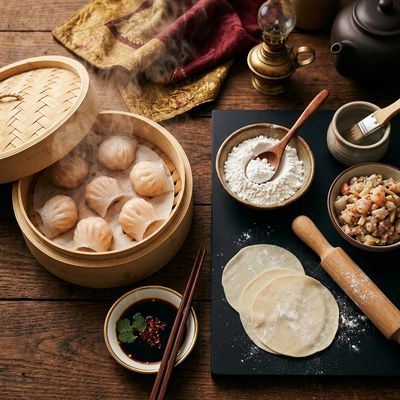
Dim sum wrappers fail because of poor hydration. For hand-rolled wrappers, aim for exactly 38% to 40% hydration. For 200g of all-purpose flour, use 75g of liquid (a mix of one egg and water). Knead until a rough ball forms, then cover and rest for at least 60 minutes. This resting period allows the gluten to relax, which is the only way to roll the dough thin enough without it snapping back.
The Assembly and Pleat Count
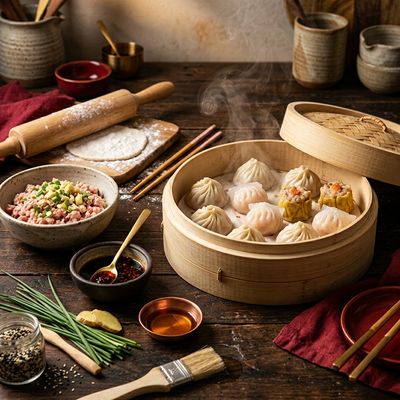
Siu Mai is an open-faced dumpling. Place 25g of filling in the center of a 3-inch wrapper. Form a 'waist' by squeezing the dumpling between your thumb and index finger. Use a butter knife to flatten the top. Aim for 12 to 15 small pleats around the top edge of the wrapper; this provides the structural integrity needed to hold the heavy meat filling during steaming.
Steamer Setup and Precision Timing
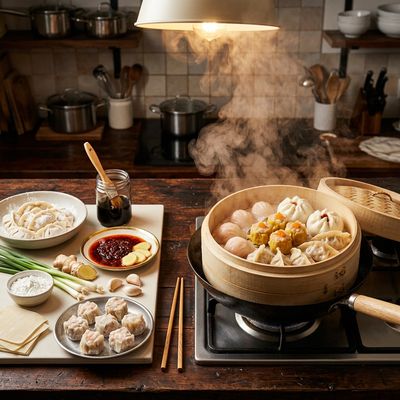
Line your bamboo steamer with perforated parchment paper or lightly oiled cabbage leaves. Do not crowd the dumplings; they need 1 inch of space for steam circulation. Place the steamer over a wok of rapidly boiling water. Steam on high heat for exactly 9 minutes for standard-sized Siu Mai. Any longer and the pork fat will render out, leaving the dumpling dry; any shorter and the 'snap' won't fully set.
Freezing and Reheating
Siu Mai should be frozen raw. Place them on a tray so they aren't touching until frozen solid, then transfer to a bag. To reheat, do not thaw. Steam directly from frozen for 12 to 14 minutes. This preserves the moisture and the structural integrity of the pleats better than microwaving or reheating cooked dumplings.