Guide
The Ultimate Guide to Perfect Home-Style Cantonese Siu Mai
Master the art of Siu Mai (燒賣), the classic Cantonese open-faced dumpling. This guide focuses on the crucial fat-to-lean ratio and technical precision with wrappers to ensure your home-steamed dim sum rivals any professional teahouse.
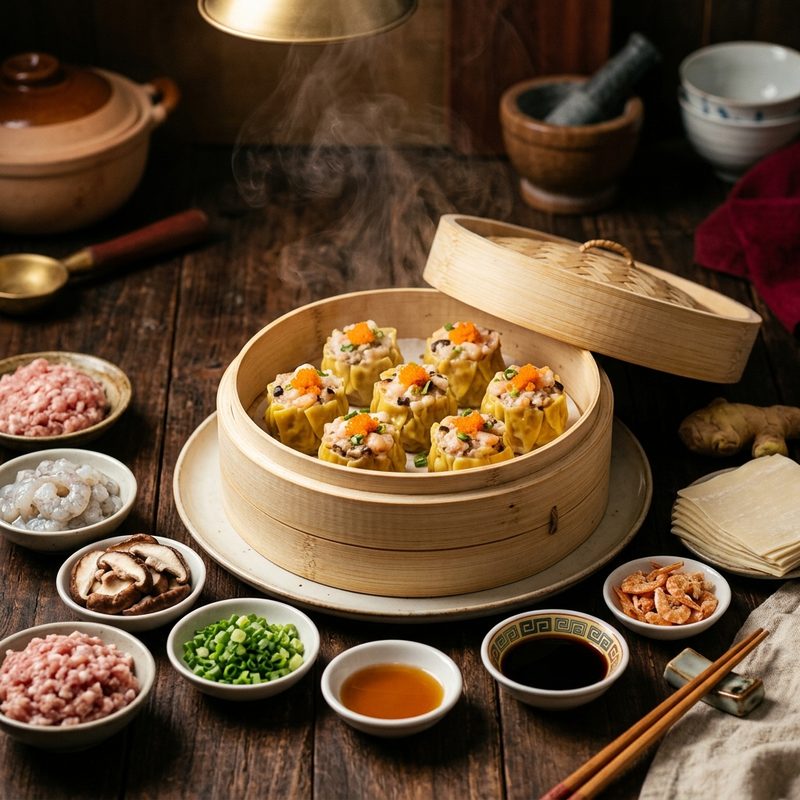
The Cantonese Classic: 燒賣 (Siu Mai)
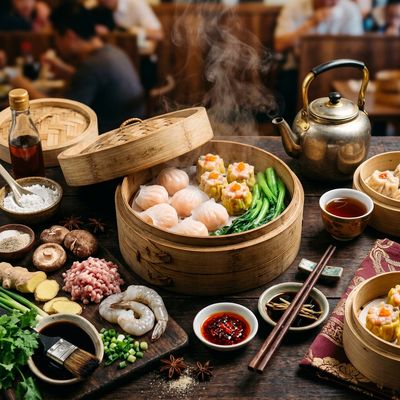
In Cantonese, Siu Mai (燒賣) translates literally to 'cook and sell.' It implies a dumpling so delicious and fresh that it is sold as soon as it leaves the steamer. Unlike the closed-top har gow, Siu Mai is an open-faced dumpling, traditionally filled with pork and shrimp, topped with a dot of crab roe or carrot. The success of a Siu Mai depends not on the complexity of the ingredients, but on the texture of the meat and the structural integrity of the wrapper.
The Golden Fat Ratio: 3:7
The most common failure in home-cooked Siu Mai is a dry, rubbery filling. To achieve the 'snappy' and juicy texture found in dim sum parlors, you must use a ratio of 30% pork back fat to 70% lean pork (ideally pork shoulder). Do not use pre-ground pork from the supermarket, which is often too lean and ground too finely. Instead, hand-dice the pork back fat into 3mm cubes and hand-mince the lean pork. This creates the 'bouncy' mouthfeel known as '爽' (song) in Cantonese. Mix the meat with a teaspoon of cornstarch and a splash of ice water, stirring vigorously in one direction until the proteins emulsify into a sticky paste.
Dough Hydration and Resting
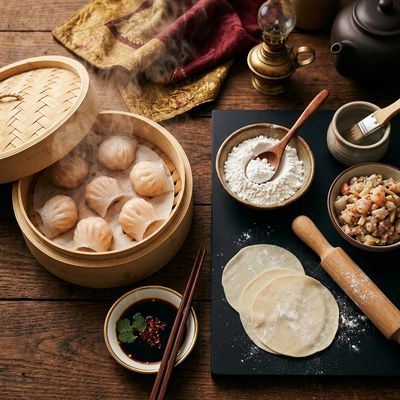
For the wrappers, precision is non-negotiable. Aim for a hydration level of 38-40%. For 200g of all-purpose flour, use one large egg (roughly 50g) and approximately 25-30ml of water. Sift the flour, create a well, and incorporate the liquids. Knead until a stiff, slightly shaggy dough forms. You must rest this dough for at least 45 minutes covered with a damp cloth. This allows the gluten to relax, which is essential for rolling the skins thin enough to be translucent without tearing during the pleating process.
The Pleat Count and Shaping
Roll your rested dough into a thin sheet (about 1mm thick) and cut into 3.5-inch circles. Place about 25g of filling in the center. Use a butter knife or a small spatula to press the filling down while pulling the edges of the wrapper up. You are aiming for 12 to 15 small pleats around the circumference. The top should be open, showing the filling, but the waist of the dumpling should be cinched slightly. Tap the bottom of the dumpling on a flat surface to ensure it stands upright and has a stable base for steaming.
Bamboo Steamer Setup and Timing
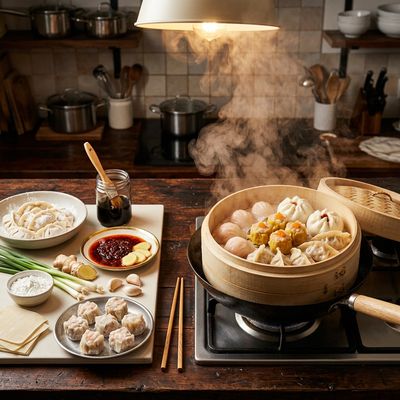
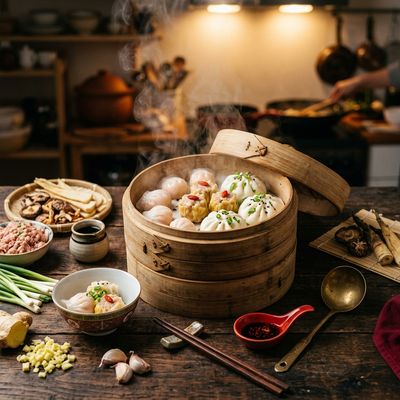
In a home kitchen, a bamboo steamer is superior to metal as it absorbs excess steam, preventing the wrappers from becoming soggy. Line the steamer with perforated parchment paper or napa cabbage leaves. Bring water in a wok or pot to a rolling boil before placing the steamer on top. For standard-sized Siu Mai, steam on medium-high heat for exactly 8 to 10 minutes. Do not peek; the trapped steam is vital for the 'skin' to set perfectly around the meat.
Freezing and Reheating
Siu Mai are excellent for make-ahead meals. Freeze them raw on a tray lined with parchment, ensuring they do not touch. Once frozen solid, transfer them to a freezer bag. To reheat, do not thaw; steam them directly from frozen for 12 to 14 minutes. This preserves the moisture content and prevents the dough from becoming mushy.