Guide
Wheat Starch vs Tapioca Starch: The Science of Translucent Dim Sum Skins
Unlock the secrets to the elusive translucent dumpling skin found in high-end dim sum parlors. This guide explains the synergy between wheat and tapioca starches and provides a foolproof method for home cooks using basic bamboo steamers.
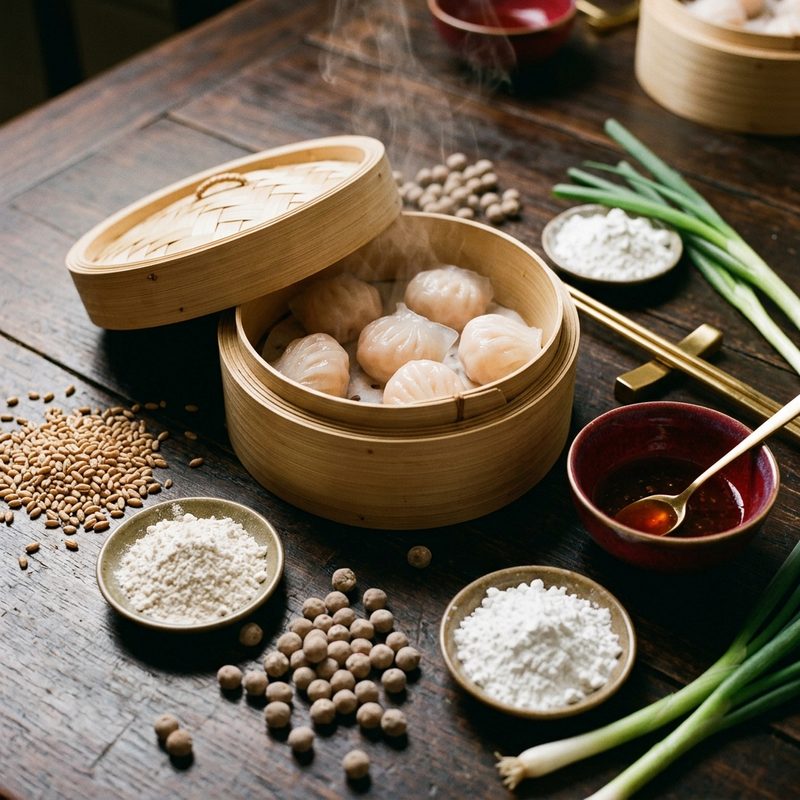
Understanding the Ingredients: Har Gow (蝦餃)
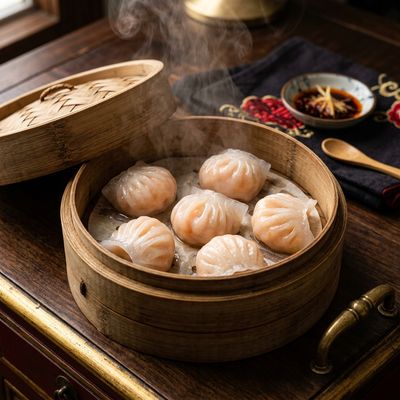
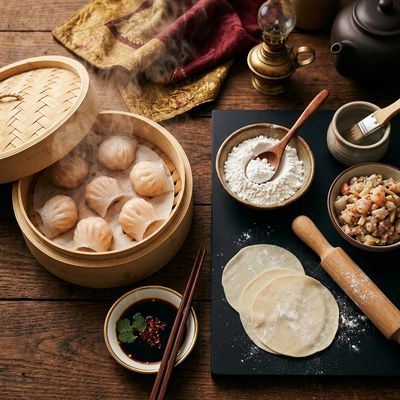
The iconic crystal shrimp dumpling, known in Cantonese as Har Gow (蝦餃)—which literally translates to 'Shrimp Dumpling'—relies on a specific blend of starches. Wheat starch (Ching Fun) provides the structural integrity and the signature white, translucent look. However, wheat starch alone is brittle. We add tapioca starch to provide elasticity, a glossy finish, and the 'QQ' (chewy) texture that prevents the skin from breaking during pleating.
The Golden Hydration Ratio
Precision is the difference between success and failure. For a standard home batch, use a ratio of 2:1 wheat starch to tapioca starch. Specifically, 100g Wheat Starch and 50g Tapioca Starch. The hydration must be exactly 100% by weight: 150ml of water. Crucially, the water must be at a rolling boil (100°C) the moment it hits the starch. This 'scalds' the starch, pre-gelatinizing it to create a workable dough rather than a non-Newtonian fluid.
Mixing and the Essential Rest
Add the boiling water to the starch mixture all at once and stir vigorously with chopsticks until a shaggy mass forms. Cover the bowl immediately with a lid or plastic wrap and let it sit for 5 minutes. This trapped steam ensures every starch granule is hydrated. After 5 minutes, knead in 10g of neutral oil (like grapeseed) until the dough is smooth and pearl-white. Wrap it tightly and let it rest for another 20 minutes; skipping this second rest will result in a dough that snaps when you try to pleat it.
Rolling and the 12-Pleat Standard
Divide the dough into 12-15g pieces. Keep the unused dough covered at all times as it dries out in minutes. Using a small rolling pin or the flat side of a greased Chinese cleaver, flatten the dough into a 3.5-inch circle. The edges should be thinner than the center. Aim for 10 to 12 pleats per dumpling. This high pleat count isn't just for aesthetics; the folds create a structural 'spine' that allows the dumpling to stand upright and expand slightly as the shrimp filling steams.
Bamboo Steamer Setup and Timing
Line your bamboo steamer with perforated parchment paper or lightly greased Napa cabbage leaves to prevent sticking. Bring the water in your wok or skillet to a boil before placing the steamer on top. Steam on high heat for exactly 6 minutes. Oversteaming is the primary cause of 'melting' skins—once the skin turns from opaque white to translucent, they are done. Remove the steamer from the heat and let it sit closed for 1 minute before serving to let the starches set.
Freezing and Reheating
Har Gow can be frozen, but only in their raw state. Place them on a tray in a single layer until frozen solid, then transfer to a bag. Do not thaw before cooking. Steam directly from frozen for 8-9 minutes. Never reheat crystal dumplings in a microwave, as it dehydrates the starch and turns the skin into a rubbery, inedible texture; always re-steam for 2 minutes to restore the translucency.