Guide
Steaming Times and Dough Secrets for Every Classic Dim Sum
Achieving restaurant-quality dim sum at home depends less on the filling and more on the precision of dough hydration, resting times, and steamer management. This guide provides the technical blueprints for steaming Cantonese favorites using a standard bamboo steamer.
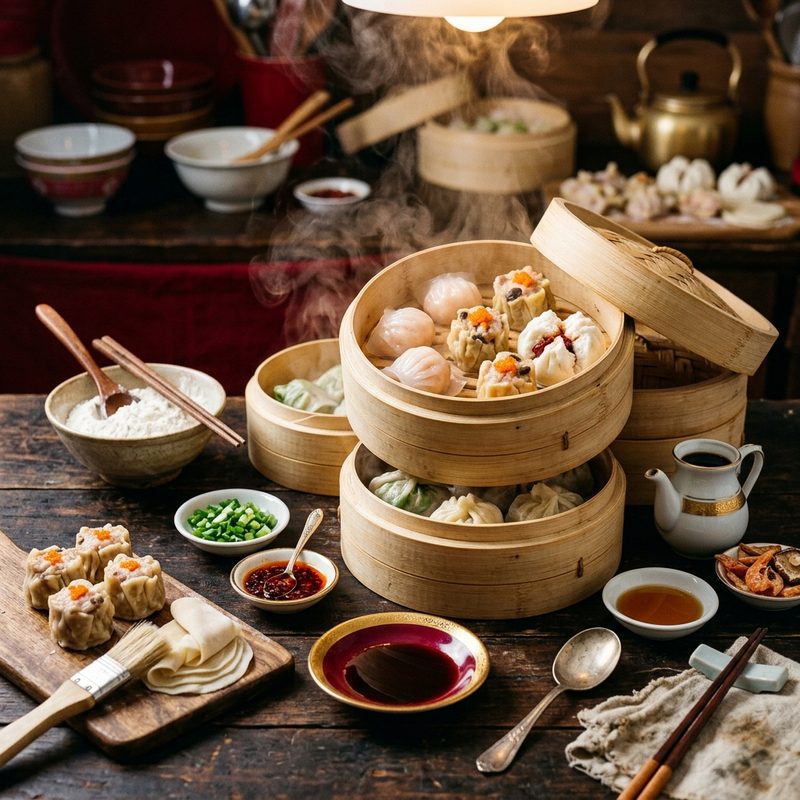
The Home Steamer Setup
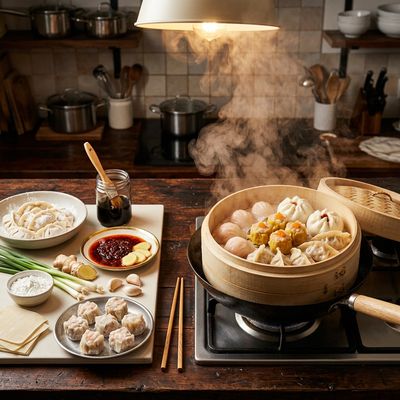
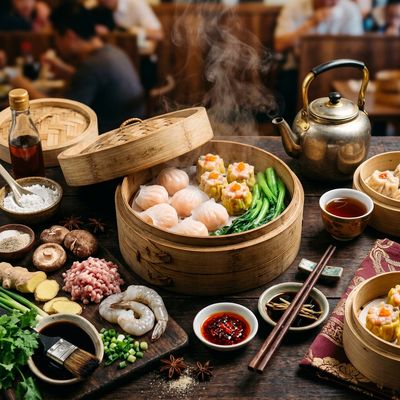
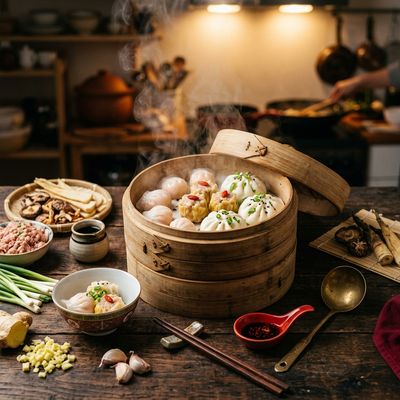
For a home kitchen, the bamboo steamer is superior to metal because the lid absorbs excess moisture, preventing condensation from dripping onto the delicate skins and making them soggy. Place your bamboo steamer over a wok or wide pot with at least two inches of water. Ensure the water never touches the bottom rack. Always bring the water to a rolling boil before placing the steamer baskets on top. Line the baskets with perforated parchment paper or lightly greased cabbage leaves to prevent sticking.
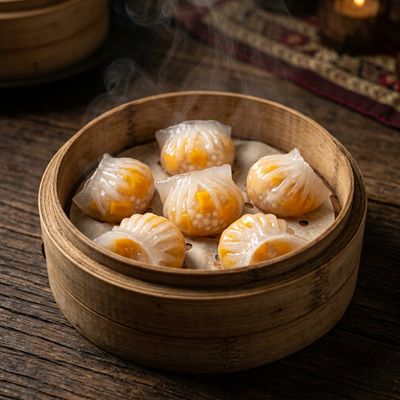
Har Gow (蝦餃 - Shrimp Dumpling)
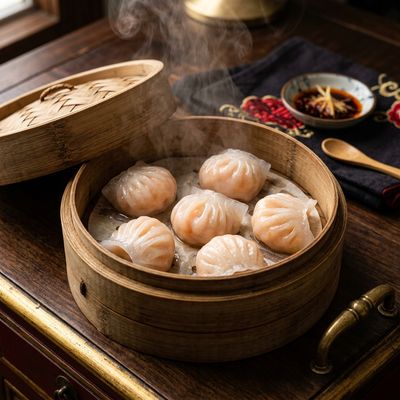
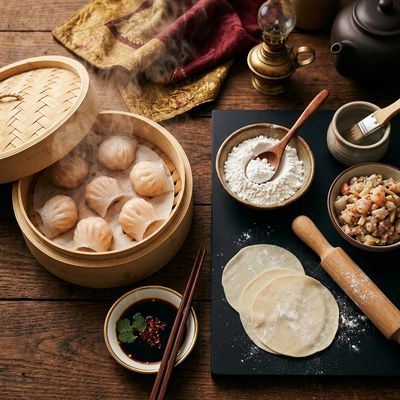
Meaning 'Shrimp Dumpling,' this is the ultimate test of a chef. The skin is a 'starch dough.' Use a 1:1 ratio of boiling water to starch (usually a mix of wheat starch and tapioca starch). The water must be boiling—100°C—to gelatinize the starch, or the dough will crumble. Knead until smooth, then add a teaspoon of lard or oil. Rest the dough for 20 minutes under a damp cloth. For the classic crescent shape, aim for 10 to 12 pleats. Steam for exactly 6 to 7 minutes. Oversteaming turns the crystal skin mushy.
Siu Mai (燒賣 - Cook and Sell)
Meaning 'To Cook and Sell,' these open-topped dumplings are more forgiving. Use a thin egg-based wrapper. If making handmade wrappers, aim for a 35% hydration (35g water per 100g flour) to ensure the skin is firm enough to stand upright. Pleat the edges into a 'waist' around the pork and shrimp filling. Because the filling is denser and exposed at the top, they require more heat. Steam for 8 to 10 minutes over high heat.
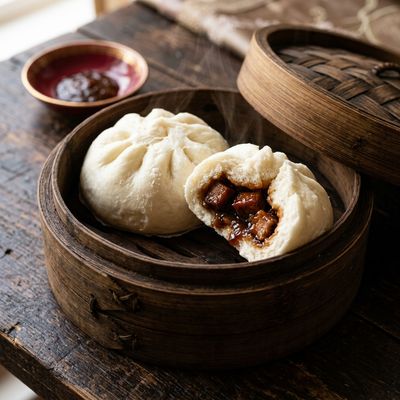
Char Siu Bao (叉燒包 - Steamed BBQ Pork Buns)
Meaning 'Fork Roast Bun,' the failure point here is usually the dough rise. Use a low-protein cake flour (8-9% protein) for a snowy white, fluffy texture. The hydration should be 50-55% (water/milk to flour). After kneading, the dough must rest for 1 hour until doubled, then shaped, and allowed a second 'proof' in the steamer for 15 minutes before the heat is turned on. Steam for 12 to 15 minutes. Crucially, turn off the heat but do not open the lid for 3 minutes; a sudden temperature drop causes the buns to collapse and wrinkle.
Lo Mai Gai (糯米雞 - Sticky Rice in Lotus Leaf)
Meaning 'Glutinous Rice Chicken,' this dish relies on steam penetration. Soak your glutinous rice for at least 4 hours (overnight is better) and par-cook it before wrapping. The lotus leaf provides flavor and protection. Because the rice is wrapped in layers of leaf, it requires the longest steaming time. Steam for 25 to 30 minutes to ensure the fats from the lap cheong (sausage) and chicken fully permeate the rice grains.
Freezing and Reheating Protocols
Most dim sum (Har Gow, Siu Mai, Dumplings) should be frozen raw on a parchment-lined tray before being transferred to a bag. Do not thaw before cooking; steam directly from frozen, adding 2-3 minutes to the standard time. Char Siu Bao are the exception—they should be steamed fully, cooled, and then frozen. Reheat frozen buns by steaming for 8 minutes to restore their fluffiness. Avoid the microwave, as it toughens the starches in the dough.