Guide
Building a Yum Cha Menu at Home: Professional Techniques for the Home Cook
Transform your home kitchen into a traditional Cantonese teahouse by mastering the technical nuances of dim sum. This guide focuses on the precise dough hydrations and steaming mechanics required to achieve restaurant-quality results using a standard bamboo steamer.
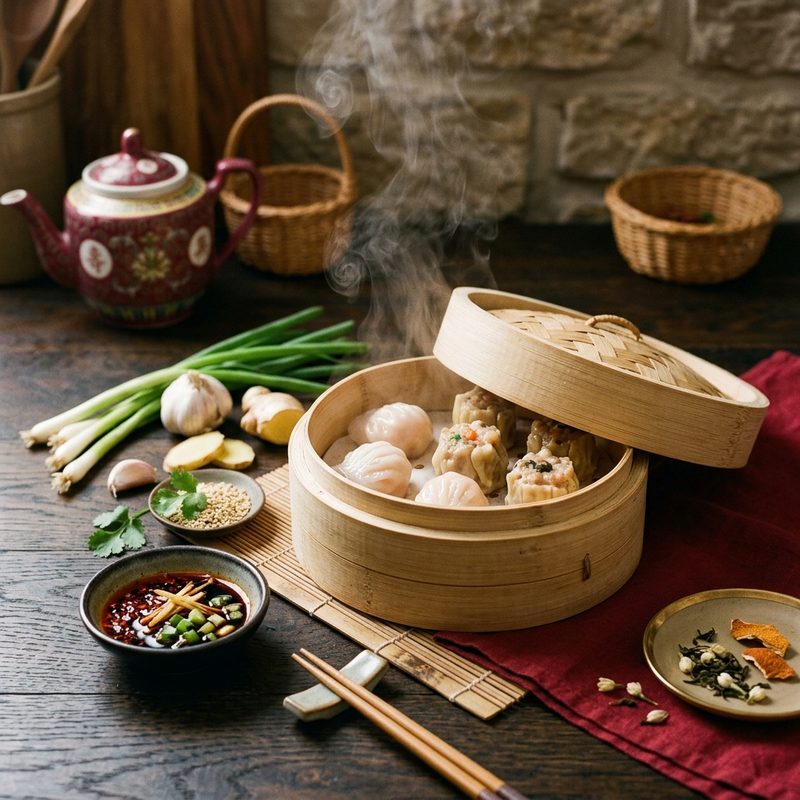
The Foundation: Steamer Setup and Heat Management
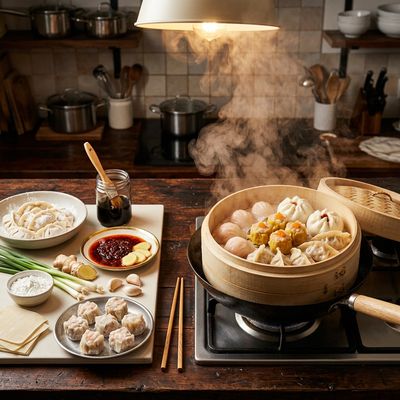
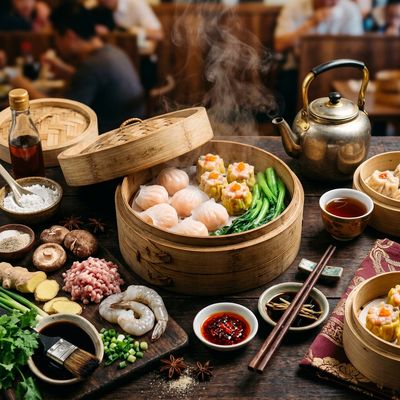
Success in Yum Cha begins with your bamboo steamer. Unlike commercial metal steamers, bamboo breathes and absorbs excess moisture, preventing your dumplings from becoming soggy. Place your steamer over a wok or wide pot filled with two inches of water. Ensure the water level is at least one inch below the bottom of the steamer tray to avoid boiling water touching the food. Use perforated parchment paper liners or a light coating of oil on cabbage leaves to prevent sticking. Always wait for a full head of steam (vigorous boiling) before placing the baskets on the pot.
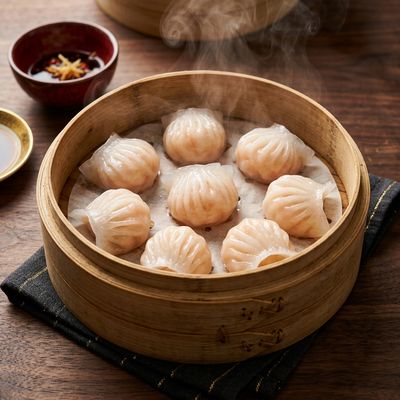
Har Gow (Shrimp Dumplings - 召餃)
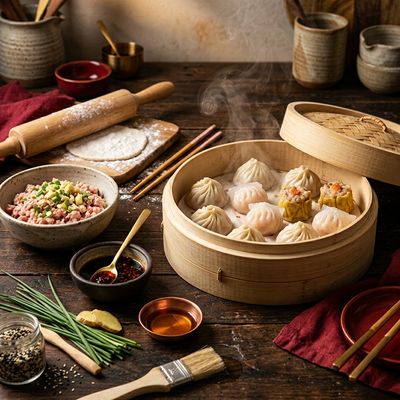
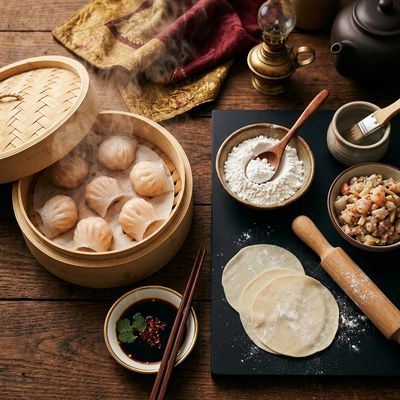
Meaning 'shrimp dumpling,' Har Gow is the gold standard of technical dim sum. The 'Crystal Skin' requires a 140% hydration ratio of boiling water to wheat starch (e.g., 100g wheat starch, 40g tapioca starch, and 200ml boiling water). The water must be bubbling when added to the starch to gelatinize it instantly. Knead with 1 teaspoon of lard or oil until a smooth, translucent dough forms. Rest for 20 minutes under a damp cloth. To fold, press a 15g ball into a circle using a greased cleaver side. Aim for 12 to 15 pleats per dumpling to create the iconic crescent shape. Steam for exactly 6 minutes on high heat.
Siu Mai (Open-top Pork Dumplings - 燒賣)
Meaning 'to cook and sell,' Siu Mai is more forgiving. Use thin egg-based wonton wrappers. The trick is the 'squeeze and tuck' method: place the filling in the center, gather the sides up, and squeeze the 'waist' of the dumpling while flattening the bottom against the counter. This creates a cylindrical shape with an exposed top. Do not overstuff; leave 5mm of room at the top for the meat to expand. Steam for 8 to 10 minutes. The filling must reach 165°F (74°C).
Char Siu Bao (Steamed BBQ Pork Buns - 叉燒包)
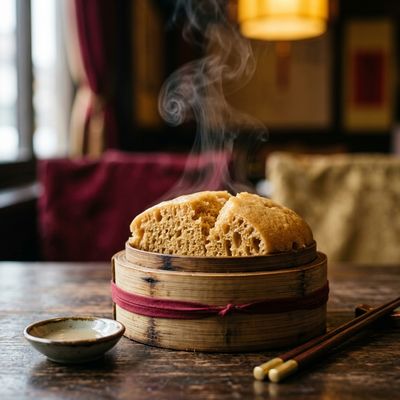
Meaning 'fork-roast bun,' these require a leavened dough with approximately 52% hydration (500g low-protein bao flour to 260ml warm water/milk). Incorporate 5g yeast and 10g baking powder. The secret to the 'smiling' burst top is a double-proofing method: let the dough rise for 1 hour until doubled, fill and pleat, then let rest for another 20 minutes before steaming. Steam on high for 12 minutes. Critical: Do not open the lid for 2 minutes after turning off the heat, or the sudden temperature drop will cause the buns to collapse and wrinkle.
Storage, Freezing, and Reheating
Dim sum is ideal for make-ahead meals. Har Gow and Siu Mai should be frozen raw. Place them on a tray in the freezer for 2 hours until hard, then transfer to a bag. Steam from frozen, adding 3-4 minutes to the original cooking time. Char Siu Bao should be steamed fully before freezing. To reheat buns, re-steam for 5 minutes; avoid the microwave as it turns the delicate starch-based dough rubbery and tough.