Guide
A Home Guide to Authentic Rice Flour Dim Sum Techniques
Unlock the secrets to professional-grade dim sum in your own kitchen using simple bamboo steamers and precise starch-to-water ratios. This guide focuses on the technical mastery of rice flour and wheat starch batters to achieve that elusive translucent 'crystal' finish.
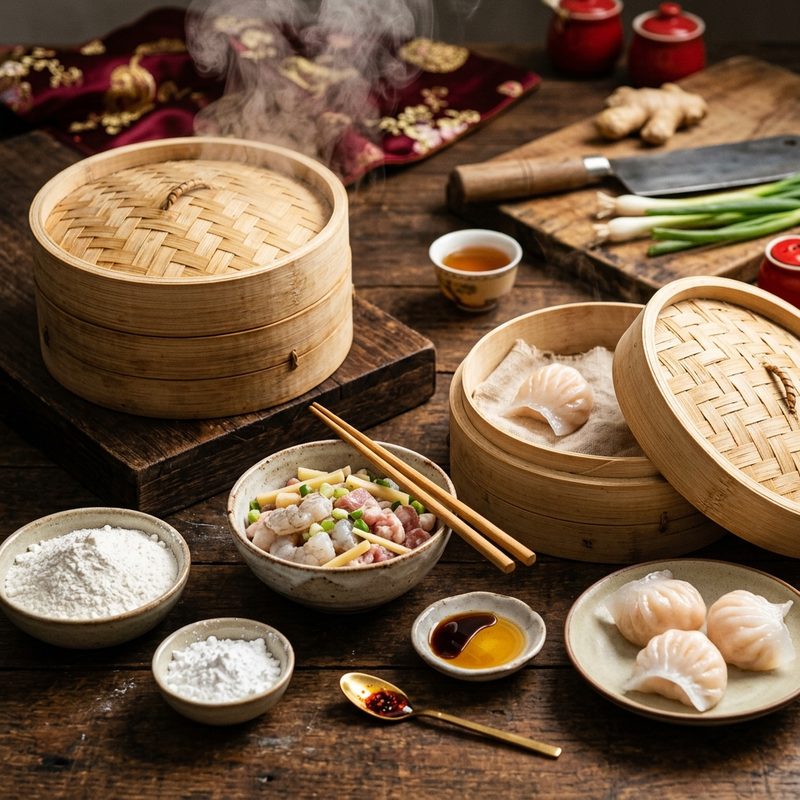
The Chemistry of the Crystal Skin: Har Gow (Ha Gaa-u)
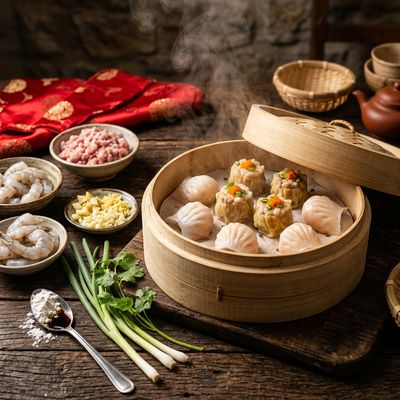
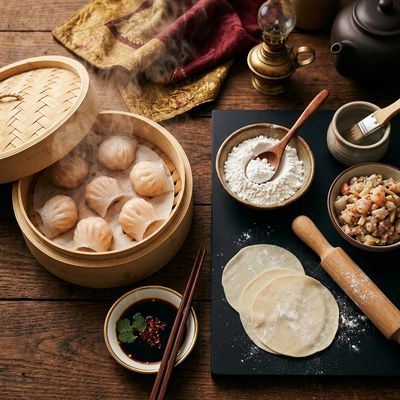
The hallmark of dim sum is the Ha Gaa-u (Shrimp Dumpling). The name literally translates to 'Shrimp Dumpling,' but its soul lies in the skin. Unlike wheat dough, this requires 'gelatinization' using boiling water. Use a ratio of 100g wheat starch, 50g cornstarch (or tapioca starch), and a pinch of salt. The hydration is critical: you must use 220ml of boiling water—it must be at a rolling boil to partially cook the starch instantly. Pour the water in a steady stream while stirring with chopsticks until a shaggy mass forms. Add 1 teaspoon of lard or neutral oil at the end to provide elasticity and sheen.
Resting and Working the Dough
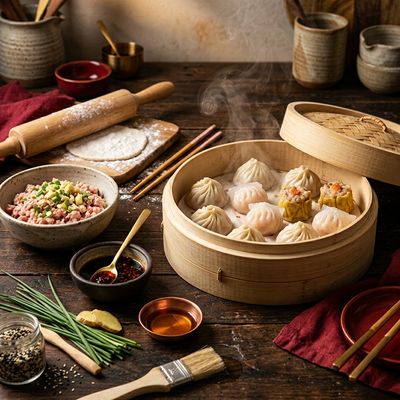
Never work with hot dough. Cover the shaggy mass with a damp cloth or lid and let it rest for exactly 10 minutes. This allows the moisture to distribute evenly. Once rested, knead until perfectly smooth. If it sticks to your hands, add a dusting of wheat starch; if it cracks, your water wasn't hot enough. When rolling out wrappers, use the side of a greased Chinese cleaver or a small rolling pin to create 3-inch circles. Keep the remaining dough covered at all times; even 60 seconds of exposure to air will cause the edges to crust and crack during pleating.
The Pleating and Steamer Setup
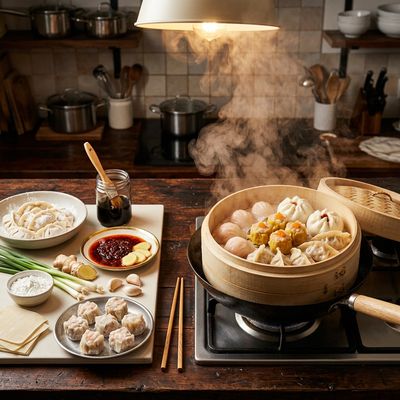
For Ha Gaa-u, the gold standard is 10 to 12 pleats. Place the filling in the center, fold the wrapper in half, and pleat only one side, pressing it against the flat back side to create the signature 'bonnet' shape. For the steamer setup, fill a wok or wide pot with water until it sits 1 inch below the bamboo steamer slats. Line the steamer with perforated parchment paper or lightly oiled napa cabbage leaves. Ensure the water is at a full boil before placing the steamer on top. This creates the immediate 'shock' of heat needed to set the starch.
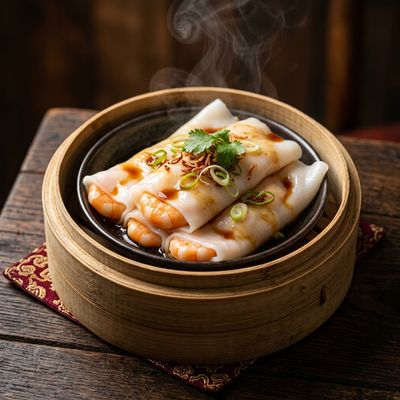
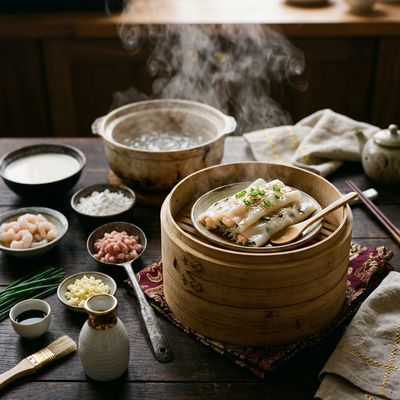
The Steamed Rice Roll: Cheong Fun (Cheung Fan)
Cheung Fan means 'Rice Noodle Roll.' At home, the batter hydration is usually 1 part rice flour to 2.5 parts water, with 1 tablespoon of wheat starch for translucency and 1 tablespoon of cornstarch for structure. The batter must be thin, like heavy cream. Use a flat-bottomed stainless steel plate or the lid of a tin that fits inside your bamboo steamer. Brush the plate with oil, pour a thin layer of batter (about 2-3mm), and steam on high for 3 minutes until the batter bubbles and turns translucent. Remove, add your filling, and roll immediately using a bench scraper.
Timing and Reheating
Steaming time is non-negotiable: 6 minutes for dumplings and 3 minutes for noodle rolls. Over-steaming results in a mushy, disintegrating skin. For leftovers, only Har Gow freeze well. Place them on a tray in a single layer until frozen solid, then transfer to a bag. Do not thaw before reheating; steam them directly from the freezer for 8-10 minutes. Cheong Fun does not freeze well as the rice sheets become brittle; they are best enjoyed immediately or refrigerated for 24 hours and pan-fried to revive them.